Analysis

The latest Drug Channels commentary — PBMs, 340B, specialty pharmacy, and the contracts that move the money.

Showing 41–50 of 2721

Thursday, June 11, 2026

  • The Top 15 Specialty Pharmacies of 2025: PBM-Affiliated Pharmacies Dominate While Health Systems and Independents Gain Ground (rerun)

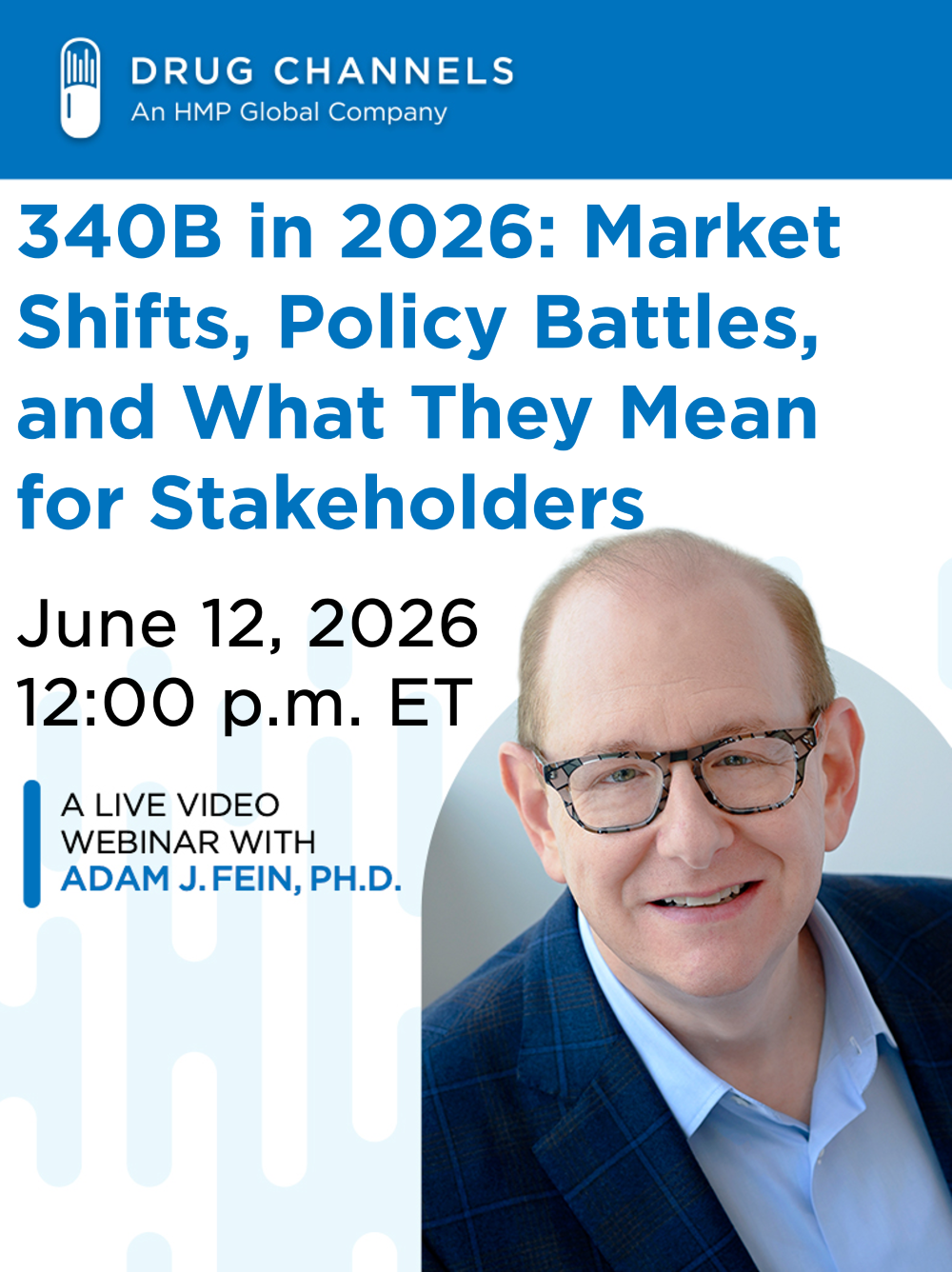
    This week, we’re rerunning some popular posts while we prepare for tomorrow’s live video webinar: 340B in 2026: Market Shifts, Policy Battles, and What They Mean for Stakeholders.

    Click here to see the original post from April 2026.


    By Adam J. Fein, Ph.D.

    Drug Channels Institute’s (DCI’s) latest analysis reveals that PBM-affiliated specialty pharmacies continue to dominate the dispensing of specialty drugs.

    For 2025, DCI has identified more than 1,900 dispensing locations with specialty pharmacy accreditation from one or both of the two major independent accreditation organizations. The overall number of accredited locations grew by only 3% in 2025, but is more than five times larger than the 2015 figure.

    However, market share for the dispensing of specialty drugs remains highly concentrated. For 2025, the three largest specialty pharmacies accounted for two-thirds of total prescription revenues from pharmacy-dispensed specialty drugs. These businesses are all owned by vertically integrated organizations that also own a PBM.

    Below, we share DCI’s latest analysis of the top 15 specialty pharmacies, including updated market shares and revenue estimates, highlighting how vertical integration and channel control continue to reshape specialty dispensing. Despite growth in accredited locations, economic power remains concentrated among a small group of PBM-affiliated entities.

    Posted by Drug Channels Institute, an HMP Global company on Thursday, June 11, 2026

    Labels: Hospitals, PBMs, Specialty Drugs

Wednesday, June 10, 2026

Tuesday, June 9, 2026

  • The Top Pharmacy Benefit Managers of 2025: Market Share and Key Industry Developments (rerun)

    This week, we’re rerunning some popular posts while we prepare for Friday’s live video webinar: 340B in 2026: Market Shifts, Policy Battles, and What They Mean for Stakeholders.

    Click here to see the original post from March 2026.


    By Adam J. Fein, Ph.D.

    Three is still the magic number for pharmacy benefit managers (PBMs).

    For 2025, 80% of all equivalent prescription claims were processed by three companies: the CVS Caremark business of CVS Health, the Express Scripts business of Cigna, and the Optum Rx business of UnitedHealth Group. Express Scripts continued to pull ahead of its peers, while CVS Caremark’s claim volume declined for the second year.

    Independent PBMs continued to gain business from these larger PBMs, showing fragmentation at the margins. Many smaller PBMs still rely on their larger competitors for claims processing, network management, and rebate negotiation. So even if a plan sponsor chooses an alternative PBM, the Big Three can still win with behind-the scenes economics.

    Below, we draw on DCI's new 2026 Economic Report on U.S. Pharmacies and Pharmacy Benefit Managers to break down the latest market share data for the largest companies.

    The Big Three PBMs’ dominance persists, but they face growing regulatory and competitive constraints. The largest PBMs are restructuring their businesses in response to client demands, legislative changes, and legal pressures. The emerging Net Pricing Drug Channel will accelerate these shifts, forcing changes in how PBMs generate profits, structure contracts, and justify their role in the drug channel.

    Posted by Drug Channels Institute, an HMP Global company on Tuesday, June 9, 2026

    Labels: Group Purchasing Organizations (GPOs), Industry Trends, PBMs

Monday, June 8, 2026

Friday, June 5, 2026

  • Pharmacy Copay Misuse: The Multi-Billion Dollar Issue Hiding In Plain Sight

    Today’s guest post comes from Stephen Hom, Co-Founder, EVP & Chief Operating Officer of RIS Rx.

    Drawing on RIS Rx’s proprietary data and case studies, Stephen highlights patterns that can undermine patient support program effectiveness. He argues that a more data-driven approach can help manufacturers identify hidden risks, improve program performance, and ensure that affordability resources reach the patients they are intended to support.

    Request a complimentary analysis from RIS Rx.

    Read on for Stephen’s insights.

    Posted by Drug Channels Institute, an HMP Global company on Friday, June 5, 2026

    Labels: Sponsored Post, Guest Post

Tuesday, June 2, 2026

  • The 340B Contract Pharmacy Market in 2026: A Maturing Industry Dominated by Big Chains and PBMs

    By Adam J. Fein, Ph.D. and Greis Kapexhiu

    It’s time for Drug Channels Institute’s latest exclusive analysis of the 340B contract pharmacy market, which continues to boom along with the overall program’s expansion.

    However, our 2026 analysis finds that the contract pharmacy market is now entering a more mature phase characterized by consolidation, slower growth, and increasing dominance by the industry’s largest participants.

    Below, we characterize the state of the marketplace:
    • Nearly two-thirds of the entire U.S. pharmacy industry participates as contract pharmacies for the 340B hospitals and federal grantees.
    • The number of 340B pharmacy locations declined for the third year, due largely to the retail pharmacy shakeout and manufacturers’ 340B policies.
    • Meanwhile, the total number of unique contract pharmacy/covered entity relationships continues to expand. Five multi-billion-dollar, for-profit, publicly traded pharmacy chains and pharmacy benefit managers (PBMs)—Cigna, CVS Health, UnitedHealth Group, Walgreens, and Walmart—now account for a record 77% of all relationships.
    The 340B program was originally designed as a narrow policy solution to address an unintended consequence of Medicaid’s best-price provision while supporting core safety-net providers. The 2026 market data illustrate just how dramatically the program’s current operations and economic incentives have diverged from that original intent.

    Read on for our latest analysis of this ever-expanding profit pool for pharmacies and PBMs. For a deep dive on what the 340B program’s growth means for drug channel participants, join Adam J. Fein, Ph.D., and Tyler Novotny on June 12 for a new live video webinar: 340B in 2026: Market Shifts, Policy Battles, and What They Mean for Stakeholders.

    Posted by Drug Channels Institute, an HMP Global company on Tuesday, June 2, 2026

    Labels: 340B, Pharmacy, PBMs, Hospitals, Channel Management

Friday, May 29, 2026

  • Drugs, Discounts and Data: Crafting Sustainability in an Imperfect System

    Today’s guest post comes from Angie Franks, Chief Executive Officer at Kalderos.

    As Angie explains, the industry still lacks the transparency needed to effectively manage where discounts occur and how funds move across stakeholders. She argues that improving visibility and coordination across the ecosystem is essential to building a more sustainable and accountable model for both innovation and patient support.

    To learn more, register for Kalderos’ free webinar on June 23, 2026:
    GTN Oversight: A New Standard of Transparency Is Here.

    Read on for Angie’s insights.

    Posted by Drug Channels Institute, an HMP Global company on Friday, May 29, 2026

    Labels: Sponsored Post, Guest Post

Wednesday, May 27, 2026

Wednesday, May 20, 2026

Friday, May 15, 2026